







Introduction
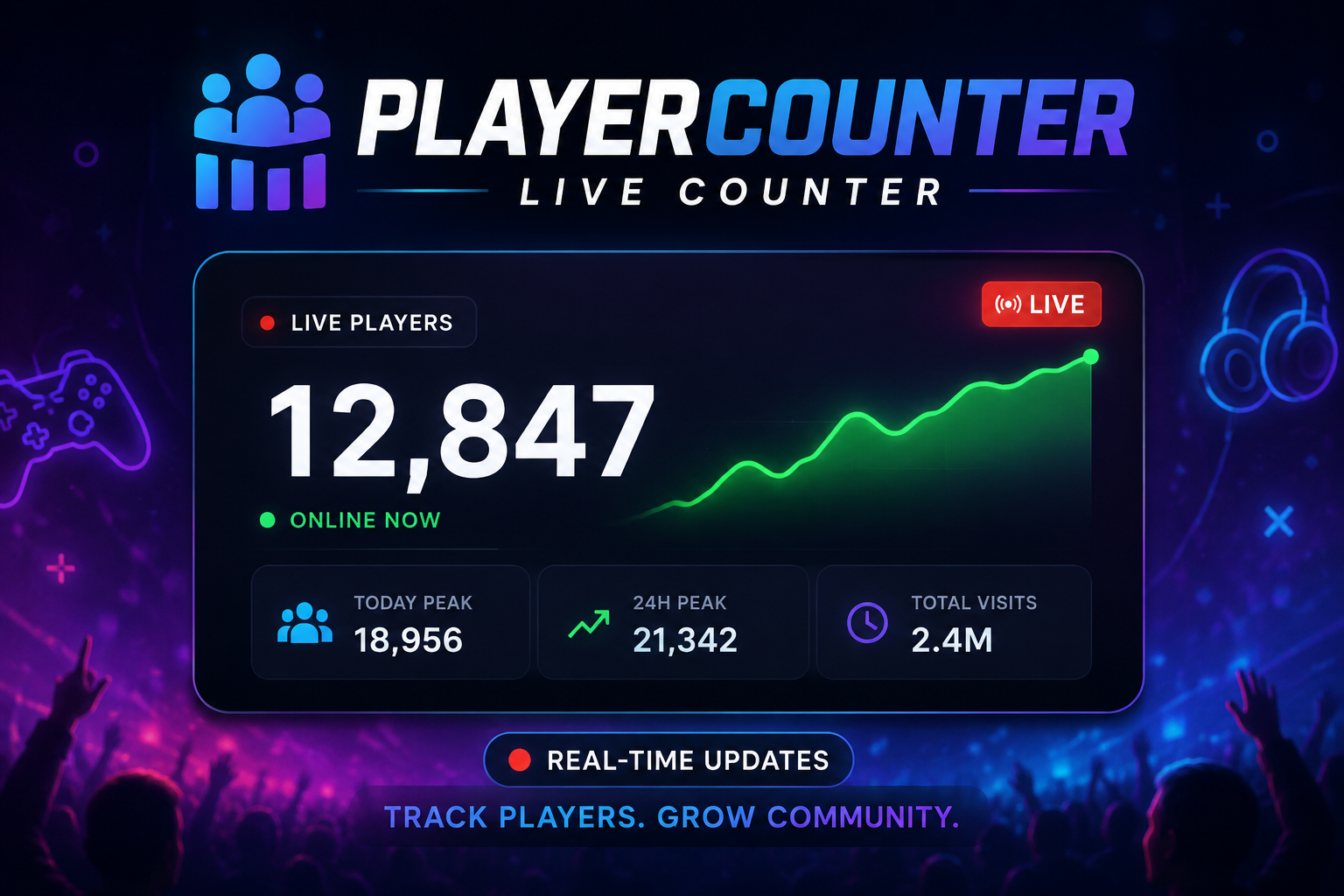
A PlayerCounter live counter is designed to show real-time or frequently updated information about the number of players active in a particular online game. These counters can be useful for gamers who want to understand how popular a title is at a given moment. They can also provide a quick overview of gaming activity, player trends, and changes in online participation without requiring users to manually collect the information.
What Is a PlayerCounter Live Counter?
A PlayerCounter live counter is a digital tool that displays player activity for supported games.
The basic idea is simple: instead of looking only at historical statistics, users can view an estimate or reported count of players currently online.
Depending on the game and the system providing the information, a counter may display:
- Current players
- Peak players
- Daily activity
- Monthly activity
- Historical records
- Player trends
- Game rankings
The exact information varies from one game to another.
How Does a Live Player Counter Work?
A live counter needs data before it can display player numbers.
The process generally involves collecting available player statistics and updating the displayed figure periodically.
Data Collection
The underlying system may receive information through an available game platform, public statistics, APIs, or other data sources.
The counter then processes the information and presents it in a simple format.
Updating the Number
A live counter does not necessarily mean that the number changes every second.
Some counters refresh frequently, while others update at longer intervals.
This distinction is important because the displayed number may represent a recent measurement rather than an exact second-by-second count.
Why Do Gamers Use Player Counters?
There are several reasons someone might search for a PlayerCounter live counter.
Checking Game Popularity
A player count can provide a quick indication of how active a game is.
If many people are playing a title, it may suggest that the game has an active community.
Choosing What to Play
Players sometimes compare games before deciding where to spend their time.
A busy multiplayer game may offer:
- Faster matchmaking
- More active servers
- Larger communities
- More frequent interactions
However, player count is only one factor to consider.
Player Count vs. Peak Player Count
These two statistics are often confused.
A current player count attempts to represent activity at a particular time.
A peak count represents the highest recorded number during a specific period.
| Statistic | What It Shows | Main Use |
|---|---|---|
| Current players | Recent active player activity | See how busy a game is now |
| Peak players | Highest recorded activity | Measure popularity records |
| Daily players | Activity across a day | Understand short-term engagement |
| Monthly players | Broader audience activity | Measure long-term reach |
| Historical peak | Highest known record | Compare major milestones |
Understanding these differences helps users interpret a PlayerCounter live counter more accurately.
Are Live Player Counters Always Exact?
Not necessarily.
A counter may display an estimate depending on how the data is collected.
Why Numbers Can Differ
Player statistics can vary because of:
- Different update intervals
- Platform differences
- Data collection methods
- Server limitations
- Regional activity
- Multiple gaming platforms
- Temporary technical issues
For this reason, a live counter should generally be viewed as a useful indicator rather than an unquestionable measurement.
Different Platforms Can Affect Player Numbers
Modern games are often available on multiple platforms.
For example, a title may have versions for:
- PC
- PlayStation
- Xbox
- Nintendo platforms
- Mobile devices
A statistic from one platform may not represent the entire player population.
Cross-Platform Games
If a game supports cross-platform play, understanding the total audience can become even more complicated.
A counter may show information from a particular platform rather than every player worldwide.
This is one reason gamers should examine what a specific counter is actually measuring.
Benefits of Using a Live Counter
A well-presented player counter can be useful for both casual gamers and people interested in gaming trends.
Quick Information
Instead of searching through multiple statistics, users can often find a current activity figure in one place.
Easy Comparisons
Players can compare several games based on recent activity.
Trend Awareness
Repeatedly checking player activity can reveal whether a game appears to be gaining or losing momentum.
Community Interest
High player activity can indicate that a game has a strong and active community.
Limitations of Player Counters
Despite their usefulness, live counters have limitations.
Data Delays
There may be a delay between actual player activity and the number shown on the counter.
Incomplete Coverage
Not every platform or game mode may be included.
Estimates
Some numbers may be calculated estimates rather than direct measurements.
Temporary Fluctuations
Player activity can change rapidly depending on:
- Time zones
- Weekends
- Holidays
- Updates
- New releases
- Special events
- Competitive tournaments
A single measurement does not always tell the complete story.
When Is Player Activity Usually Higher?
Gaming activity often changes throughout the day.
Time Zones
A globally popular game can have different activity levels depending on where players are currently awake.
Weekends
Many games experience increased activity during weekends because more people have free time.
Major Updates
New content can temporarily attract large numbers of returning players.
Events
Limited-time events, collaborations, and tournaments can also create sudden increases in player activity.
How to Read a PlayerCounter Live Counter
When using a live counter, look beyond the largest number displayed.
Ask:
- What game is being measured?
- Which platform does the number represent?
- Is the figure current or delayed?
- Is it an estimate?
- Does it represent current players or a peak?
- What time period is being measured?
These questions help prevent incorrect conclusions.
Why Player Numbers Matter to Game Developers
Player statistics are not only useful to gamers.
Developers can also benefit from understanding audience activity.
Player trends may provide insight into:
- Engagement
- Retention
- Update performance
- Popular game modes
- Seasonal activity
- Community growth
However, raw player numbers are only one part of measuring a game’s health.
A smaller community can still be highly engaged and successful.
Player Counts and Game Longevity
A stable player base can be a positive sign for multiplayer games.
Consistent activity may help maintain:
- Matchmaking
- Online communities
- Competitive scenes
- Server populations
- Content creation
Sudden drops do not necessarily mean a game is failing, though.
Players may temporarily leave because of competing releases, seasonal schedules, or other events.
Tips for Comparing Games
If you’re using a PlayerCounter live counter to compare games, avoid relying on one number.
Consider additional factors such as:
- Game genre
- Platform availability
- Release date
- Community size
- Update frequency
- Matchmaking speed
- Reviews
- Competitive activity
A newer game may have a smaller total audience simply because it has existed for less time.
Frequently Asked Questions
1. What is a PlayerCounter live counter?
It is a tool or statistic display designed to show current or recently measured player activity for supported online games.
2. Is a live player count always accurate?
Not necessarily. Some counters may experience delays, use estimates, or cover only certain platforms or data sources.
3. What is the difference between current players and peak players?
Current players represent recent activity at a particular time, while peak players indicate the highest recorded player count during a defined period.
4. Why does a game’s player count change so quickly?
Player activity naturally changes because of time zones, weekends, updates, events, holidays, and new game releases.
5. Can player counts determine whether a game is good?
No. Player numbers can indicate popularity and activity, but they do not measure gameplay quality, graphics, community behavior, or overall enjoyment.
Conclusion
A PlayerCounter live counter can be a convenient way to understand online gaming activity and compare the popularity of different titles. However, live figures should be interpreted carefully because update delays, platform differences, estimates, and temporary fluctuations can affect the numbers displayed. When combined with other information such as game quality, community engagement, and long-term trends, player counters can provide a useful snapshot of the constantly changing online gaming landscape.