









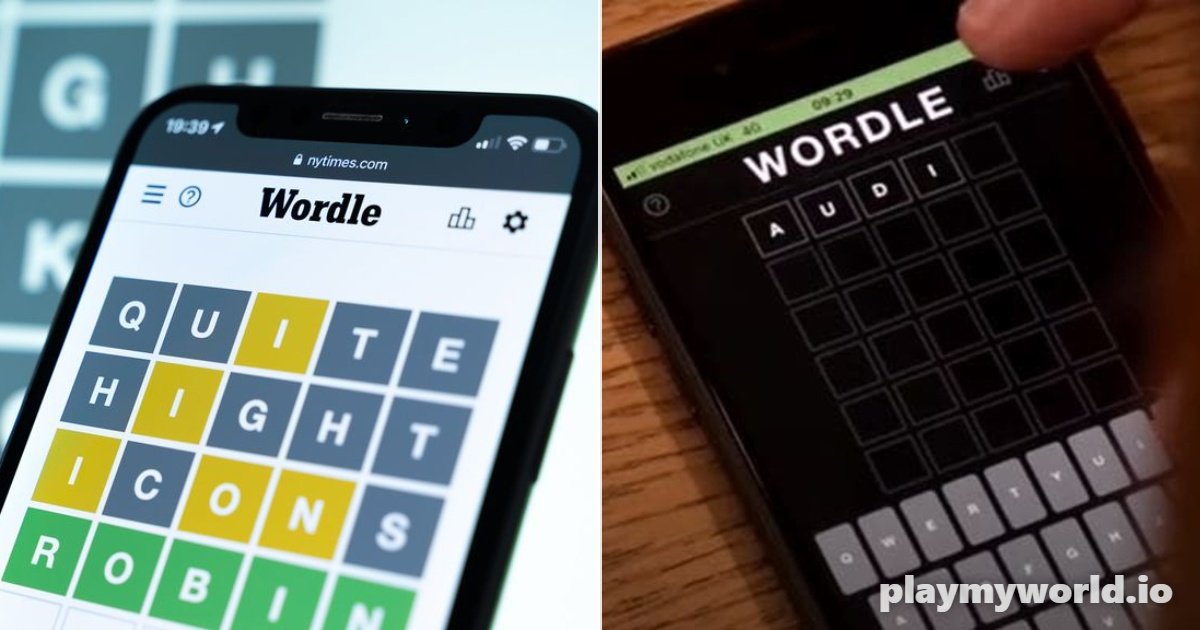
If you play Wordle every morning, you have probably wondered whether you could be playing it a little more cleverly. That is exactly the question WordleBot was built to answer. It is the New York Times’ own analysis tool for Wordle, and rather than telling you today’s word, it studies the way you played, scores your performance, and reveals the strongest moves you could have made instead. This article covers what it is, how it works, the word it recommends starting with, whether it still costs money, and where to turn if you would rather not pay.
What WordleBot Actually Is
WordleBot is an analytical companion for Wordle, owned and operated by The New York Times. The idea is simple: you finish your daily puzzle first, and the tool then reviews your grid and breaks down every guess, not just whether you won but how efficiently you got there. The original launched in April 2022 in The Upshot, the paper’s data-journalism section, and was built by the data journalists Josh Katz and Matthew Conlen, who set out to settle a long-running argument about which word makes the best opening guess. In December 2023 the Times released a significantly upgraded version, WordleBot 2.0, which powers the analysis players see today.
How WordleBot Analyzes Your Game
Once you finish a puzzle, WordleBot grades your play in three categories against the average of every New York Times player. Skill measures how well each guess narrowed the remaining answers, so a high score means your guesses did real work regardless of luck. Luck rewards a guess that happened to lock in several letters or point you quickly toward the solution. Steps is simply the number of turns it took you. Beyond those numbers, it walks through your guesses one at a time, flags stronger alternatives you could have played, and finishes by showing how it would have cracked the same puzzle. Under the hood it uses a dictionary of roughly 4,500 five-letter words and knows all 2,309 possible answers. Because it only runs after you have finished, using it is not considered cheating.
The Best Starting Word According to WordleBot
For many people the whole appeal of WordleBot comes down to the recommended opening word. Today its top-rated normal-mode opener is SLATE, which earns a near-perfect skill score, though it does not stand alone. The bot awards that same top rating to a small cluster of near-identical performers including CRANE, TRACE, CRATE and CARTE, so any one of them makes an excellent first guess. These words win because their letters are among the most common in the answer pool and are spread across positions to squeeze the most information from a single guess. The differences between them are so small that the Times effectively treats SLATE and CRANE as the two strongest choices, with the rest essentially tied.
Why WordleBot Keeps Changing Its Recommendation
If you have used WordleBot at different times and noticed it suggesting different words, you are not imagining things. Its choice has shifted repeatedly, which confuses a lot of players. In its early days it flip-flopped between SLATE and CRANE, briefly settled on TRACE at the start of 2024, then adopted CRANE as its main recommendation from February 2024 through to July 2025, the version many longtime players remember best. Around the middle of 2025, following further mathematical analysis, the recommendation moved again and landed on SLATE. The explanation is reassuringly dull. These top words are so close in value that even minor changes in how the underlying math is run can reshuffle the order. CRANE did not suddenly become worse. SLATE simply edged marginally ahead, and the practical difference between the two is tiny.
Hard Mode, the Mathematicians, and the Human Factor
The picture changes in hard mode, where any letters you reveal must be reused in later guesses, so you want an opener that keeps your options flexible. There WordleBot has favoured words such as CLASP, with SCALD and PLACE scoring similarly, while at other points pointing toward DEALT or LEAST. Its suggestions are excellent but not the last word. Researchers at the Massachusetts Institute of Technology published a paper arguing that the mathematically optimal opener is SALET, an obscure word for a medieval helmet that Wordle accepts, which along with the related ROATE shrinks the field of answers slightly more effectively than SLATE. Yet the tool’s own creators stress a caveat that is easy to overlook. WordleBot knows all 2,309 answers and you do not, so a theoretically weaker word that leads you toward letters you personally recognise can serve you better than the perfect one. Treat its recommendation as a strong default rather than an instruction.
Is WordleBot Still Free?
Here the honest answer has two parts, because the situation has changed. When WordleBot launched in 2022 it was free, and all you had to do was register a New York Times account. That is no longer the case. Today the tool is available only to New York Times subscribers, specifically those with a Games, News or All Access plan. Two points soften the blow. First, Wordle itself remains completely free, as does Connections, so the paywall applies to the analysis tool and extras like the archive of past puzzles rather than to your daily game. Second, the cheapest way in is the New York Times Games subscription, which recent reporting puts at roughly a dollar and a half per week, or around fifty dollars for a full year, though the figure varies by region and current promotions. The paper also offers introductory trials from time to time, the easiest way to try the tool before committing.
How to Access and Use WordleBot
Assuming you have access, getting to WordleBot is easy. The most reliable method is to open it on the same device where you played, since your result is stored locally, so it imports your finished game automatically and goes straight to the analysis. It is also built into the New York Times Games app, so players on Android and iPhone get the same experience. To analyse a game from another device, upload a screenshot of your completed grid, drag the crosshairs around the tiles, and the tool reads and analyses it as though you had played it there. Its appearance follows the display settings of the Games app and your device, so for dark mode you simply switch those to dark rather than hunting for a toggle inside the tool.
Free Alternatives Worth Knowing
If you would rather not pay, or you just want extra tools alongside the official bot, there is a healthy ecosystem of free options. The independent site Engaging Data runs a popular page that graphs how many guesses players needed to solve the day’s puzzle and shows how difficult it was compared with many past puzzles, giving you much of the same satisfaction WordleBot provides. The same creator makes free, unlimited practice games in the Wordle style, including one that lets you play words of different lengths and another that adds a scoring twist. For the more technically curious, numerous open-source solving bots are hosted online, some tuned for raw efficiency and others favouring everyday words over obscure ones. A separate tool also shares the WordleBot name but is unrelated to the Times: a free chat-based bot that tracks a group’s daily results and builds shared statistics.
Has WordleBot Ever Lost?
It is a fun question, and the answer is that it almost never loses, but not quite never. Its complete knowledge of the answer list means it solves the overwhelming majority of puzzles comfortably, averaging somewhere around three and a half guesses, better than the typical human average of roughly four. Its weakness lies in a specific kind of puzzle, one where the pattern leaves several words that differ by only a single letter, such as a family sharing a common ending or answers built on a double letter. On days like that, even flawless play can leave a handful of equally likely options and force a guess late into the grid. The nastiest puzzles ever produced, including some that defeated huge numbers of ordinary players, have genuinely pushed the bot, particularly in hard mode where it cannot freely test eliminating words. So while a failure is rare, it has certainly happened on the very hardest days.
Conclusion
WordleBot remains the clearest window into your own Wordle game. It will not hand you today’s answer — that is rather the point — but it steadily teaches you to think like a stronger player, one guess at a time. Its current favourite opener is SLATE, with CRANE and a few others close behind, though the smartest move is usually to choose a strong, comfortable starter and let the bot refine everything that comes after. The one real catch is cost, since the analysis now sits behind a subscription even though the game itself stays free. If that price is not for you, the free alternatives cover much of the same ground. Either way, the simple habit of reviewing why you played the way you did is the fastest route to improvement. The players who climb the leaderboard are rarely the ones fixating on today’s score, but the ones who study the game once it is over.
You May Also Read : Bret Stephens