








Introduction
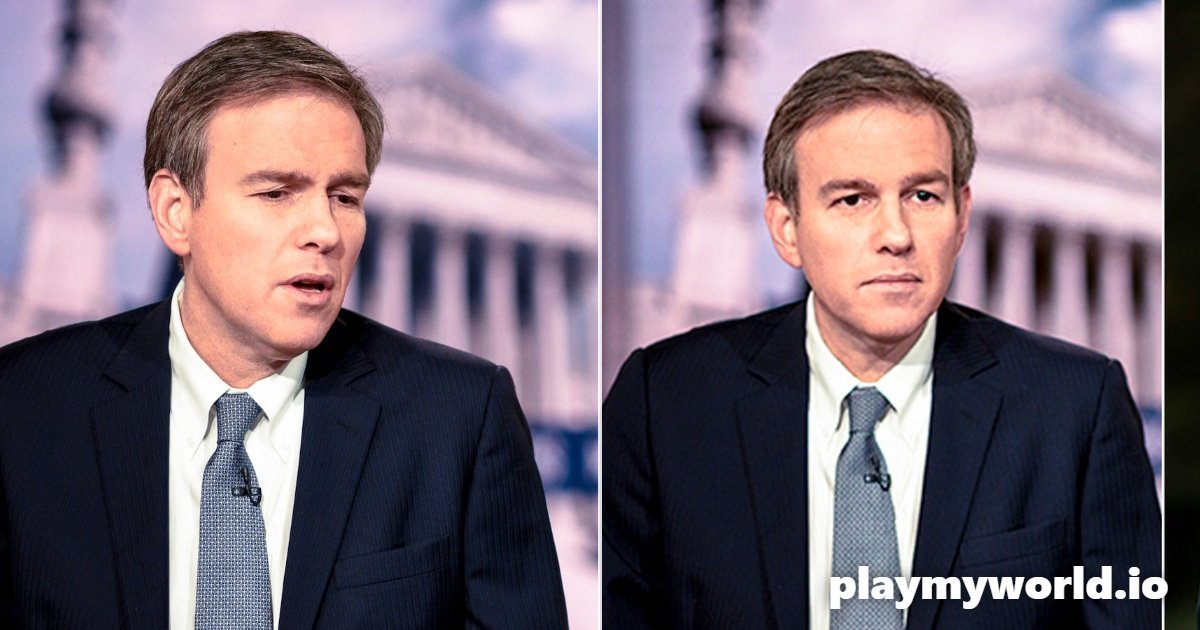
Bret Stephens is one of the best-known opinion writers in the United States. He is a columnist for The New York Times, a Pulitzer Prize winner, and a familiar voice on television and in public debate. He has built a reputation as a thoughtful conservative who is never afraid to stand apart from the crowd. He often disagrees with the left, but he has also broken with much of the modern right, leaving him without an easy home in either camp. His writing covers foreign policy, national politics, culture, and Jewish life, and it usually comes with a twist that forces readers to think again. This article looks at his life, his career, and the beliefs that have shaped his work.
Early Life and Education
Bret Louis Stephens was born on November 21, 1973, in New York City, but he spent most of his childhood in Mexico City, where his father worked as an executive at a chemical company. His family came from a secular Jewish background. Growing up as a Jewish American boy in Mexico gave him a sense of being both an insider and an outsider at once, and he has often said this identity became one of the richest parts of his life. It also left him fluent in Spanish, and later French, which helped him greatly as an international journalist.
For his education, Stephens attended the Middlesex School in Massachusetts before studying at the University of Chicago, where he graduated with honors in 1995 with a degree in political philosophy. He later earned a master’s degree from the London School of Economics. The University of Chicago, known for its focus on great books and careful argument, shaped his style of thinking and writing, which values debate and clear reasoning over easy agreement.
His Journalism Career Begins
Stephens started his career in 1995 at Commentary, a respected magazine of conservative and Jewish thought that he is still connected with today. In 1998 he joined The Wall Street Journal as an editor for opinion pieces in New York. Not long after, he moved to Europe to work for the paper’s European edition in Brussels, where he edited a weekly column about the European Union.
These years abroad gave him a close view of world politics and helped him develop the strong interest in foreign affairs that would define much of his later work. His belief in the United States as a steadying power in the world took root during this time and would shape almost everything he wrote.
Editor of The Jerusalem Post
In 2002, when he was only twenty-eight years old, Stephens was named editor-in-chief of The Jerusalem Post, one of Israel’s most important English-language newspapers. It was a surprising choice for many, since he was a young American rather than an Israeli. In this role he oversaw the paper’s news, opinion, digital, and international operations, and he also wrote a weekly column.
His time in Jerusalem was a turning point. Leading a major newspaper in Israel during a period of conflict deepened both his knowledge of the Middle East and his personal connection to the Jewish state, themes that would later become central to his writing. He returned to The Wall Street Journal at the end of 2004.
The Pulitzer Prize and Success at The Wall Street Journal
Back at the Journal, Stephens took over its main foreign affairs column, “Global View,” in 2006. He also rose to become the paper’s deputy editorial page editor, in charge of its international opinion coverage. For eleven years he was the Journal‘s foreign affairs columnist, reporting from around the world and interviewing many world leaders.
In 2013 this work earned him the Pulitzer Prize for Commentary, a top honor in American journalism. He was praised for his sharp columns on foreign policy and domestic politics, often marked by his contrarian point of view. Around this time he also wrote his best-known book, America in Retreat: The New Isolationism and the Coming Global Disorder, published in 2014. In it he argued that when the United States steps back from its role as a global leader, the result is not peace but more disorder around the world.
Joining The New York Times and the Controversies That Followed
In April 2017, Stephens made a major move by leaving the conservative pages of The Wall Street Journal to become an opinion columnist at The New York Times. His hiring caused an immediate stir, as many readers of the famously liberal newspaper were unhappy, pointing to his conservative record and his skeptical writing on climate change.
His very first column, “Climate of Complete Certainty,” set off one of the biggest reader reactions the paper had seen in years. In it he did not deny that the planet is warming or that humans are responsible. Instead, he argued that too much certainty in the debate was pushing people away, and that a little humility might lead to a better conversation. Even so, thousands of readers complained, and some canceled their subscriptions, accusing him of downplaying the issue.
Another moment came in 2019. After news spread that the Times newsroom had a bedbug problem, a university professor posted a small joke online comparing Stephens to a bedbug. Stephens found the joke, which had drawn almost no attention, and emailed the professor while also copying the professor’s boss. The exchange became public and spread quickly, and he was widely criticized for reacting so strongly to a harmless remark.
Political Views and the Trump Era
For much of the past decade, the most important part of Stephens’s politics was his opposition to Donald Trump. He was an early and firm critic, and he proudly called himself a “Never Trump” conservative for years. His conservatism is an older kind, focused on strong defense, free trade, and a suspicion of populism, rather than the newer, angrier style of politics that has taken over much of the right.
This independence was clear in the 2024 election. After months of hesitation, he announced that he would vote for Kamala Harris, saying he did so mainly as a vote against Trump rather than strong support for her. Yet after the election he surprised some allies by writing that it was time to drop the constant moralizing of the Never Trump movement, which he felt had become weak and out of touch. He argued that ordinary Americans cared more about the cost of living and the border than his fellow critics had understood. This willingness to shift his tone, while still criticizing policies he disagreed with, is typical of a writer who refuses to be trapped by any label.
A Strong Voice on Israel and Jewish Identity
Israel and Jewish life are at the very heart of Stephens’s work. He is a proud Zionist and one of the best-known defenders of Israel in American media, and he argues that Western coverage often misunderstands Israel’s difficult security situation. His years editing The Jerusalem Post gave him deep firsthand experience, and events in the Middle East in recent years have made these subjects even more central to his columns.
In 2021 he founded and became the first editor-in-chief of Sapir, a journal focused on the future of Jewish life. He has also become a leading voice in a wider conversation about how Jewish communities should respond to rising hostility. In early 2026 he gave a major address in New York arguing that much of the money spent fighting prejudice would be better used building Jewish schools, culture, and institutions from within. The speech sparked strong debate, showing again that he is willing to challenge the leaders of his own community as readily as his political opponents.
Personal Life and Interests
Away from his public writing, Stephens lives in the New York City area with his family. He was married before to an editor who also later wrote for the Times, and he is now married to a classical music critic and writer. Together they have three children. Outside of politics, he is a keen birdwatcher and a trained pianist, quieter hobbies that offer a gentle contrast to his sharp and often combative public voice.
Conclusion
Bret Stephens has spent his career refusing to fit neatly into any single group. He is a conservative who has voted for a Democrat, a New York Times writer disliked by parts of the left, and a critic of Trump who grew tired of the movement against him. Along the way he has faced real controversy, from his writing on climate change to the strong reactions his choices have brought. His critics see him as stubborn or inconsistent, while his admirers praise his honesty and his courage to say uncomfortable things to every audience, including his own side. In a time of deep division and loud arguments, he remains a distinctive figure, still writing, still questioning, and still thinking for himself.
You May Also Read : T.J. Lane