





The killing of conservative activist Charlie Kirk has led to one of the most closely followed legal cases in recent American history. Kirk, the 31-year-old co-founder and chief executive of Turning Point USA and a close ally of President Donald Trump, was assassinated on September 10, 2025, while speaking at Utah Valley University. Nearly a year later, the man accused of pulling the trigger, 23-year-old Tyler Robinson, faces capital murder charges that could carry the death penalty. While many people search for news of the “Charlie Kirk trial,” the case has spent months moving through pretrial hearings, and a judge is now preparing to decide whether it will proceed to a full jury trial. This article explains what happened, who Tyler Robinson is, the evidence against him, and where the case stands today.
The Assassination That Shook the Nation
Charlie Kirk was shot once in the neck at roughly 12:23 in the afternoon during an outdoor event on the campus of Utah Valley University in Orem, Utah. The appearance was the opening stop of his “American Comeback Tour,” a speaking and debate series that drew about 3,000 people. Kirk was seated under a tent, engaged in a back-and-forth with a student about mass shootings, when the fatal shot was fired from the roof of a nearby campus building around 130 to 145 yards away. Witnesses described panic and chaos as the crowd scattered. Kirk was rushed to Timpanogos Regional Hospital, where he was pronounced dead. His death sent shockwaves through American politics and was widely described as a stark example of rising political violence in the country. His memorial service was held days later at State Farm Stadium in Arizona, drawing tens of thousands of mourners.
Who Is Tyler Robinson?
Tyler James Robinson, born in April 2003, was 22 years old at the time of the shooting and is now 23. He grew up in Washington, Utah, in the southwestern part of the state, the eldest of three brothers in a family that has been described as close-knit and largely conservative. The Robinsons are members of The Church of Jesus Christ of Latter-day Saints. Robinson had no prior criminal record and had been a strong student, graduating from Pine View High School and later enrolling in an electrical apprenticeship program at Dixie Technical College. He briefly attended Utah State University before dropping out. According to statements from investigators and family members, his political views had shifted over the previous year, moving away from his family’s outlook. Prosecutors have alleged that Robinson grew estranged from his family’s conservative beliefs, a claim the defense contests.
The Manhunt and Surrender
The search for Kirk’s killer triggered an intense manhunt that lasted roughly 33 hours and involved local law enforcement, the FBI, and federal firearms investigators. Authorities recovered a rifle from a wooded area near the campus and released photographs of a person of interest while offering a substantial reward for information. The break in the case came from Robinson’s own family. His parents reportedly recognized their son in the images released by investigators and convinced him to come to their home, where he allegedly implied that he was the shooter. Fearful of how a confrontation with police might unfold, the family contacted a friend who was a retired detective, and that intermediary arranged Robinson’s surrender. He turned himself in to the Washington County Sheriff’s Office on the evening of September 11, 2025, without incident, and the governor confirmed the following day that Robinson was the only suspect.
The Charges Against Tyler Robinson
On September 16, 2025, Utah County Attorney Jeff Gray formally announced the charges. The centerpiece is a count of aggravated murder, a capital offense in Utah. In total, Robinson faces seven criminal counts, including felony discharge of a firearm, two counts of obstruction of justice for allegedly hiding the rifle and discarding clothing, two counts of witness tampering for allegedly instructing his roommate to delete messages and stay silent, and one count of committing a violent offense in the presence of children. Prosecutors also attached three victim-targeting sentencing enhancements, reflecting their allegation that Robinson chose Kirk as a target because of his political expression. Gray filed a notice of intent to seek the death penalty, and Robinson has been held without bail since his arrest. He has not yet entered a plea and remains presumed innocent.
The Evidence Presented by Prosecutors
Prosecutors have described their evidence as overwhelming. Investigators recovered an older-model Mauser-type bolt-action rifle chambered in .30-06 from the woods near the campus, and the state says DNA links Robinson to a towel wrapped around the weapon and to a screwdriver found at the rooftop shooting position. Surveillance footage, according to the state, tracks the suspect moving across campus and onto the roof before the shooting and fleeing afterward. Among the most widely discussed evidence are the engraved bullet casings found with the rifle, which investigators described as a mixture of internet memes, video game references, and pop-culture in-jokes rather than a clear political statement. Prosecutors also point to messages they describe as confessions, including texts allegedly exchanged with Robinson’s roommate and partner, Lance Twiggs, and posts in an online group chat in which Robinson allegedly admitted responsibility roughly an hour after the shooting. The defense has firmly contested the reliability and interpretation of much of this material.
The Preliminary Hearing in Provo
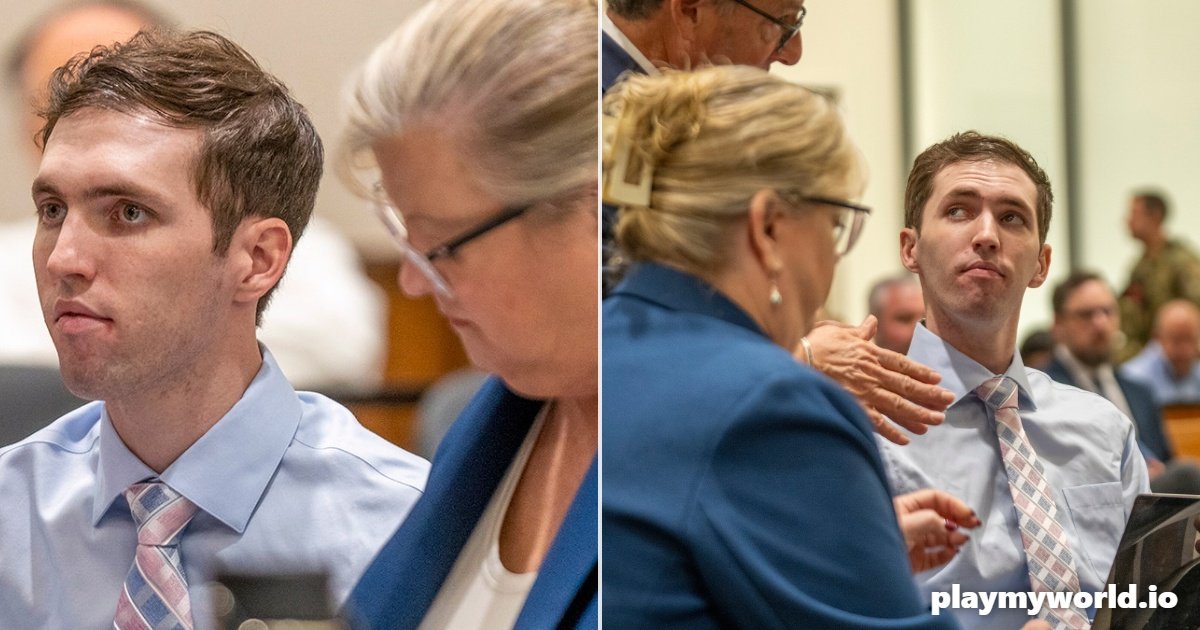
The preliminary hearing, held over five days in July 2026 in Utah’s Fourth District Court in Provo, marked the most significant presentation of evidence in the case so far. The purpose of such a hearing is not to determine guilt but to decide whether there is enough probable cause for the case to proceed to trial. Over the five days, prosecutors displayed campus surveillance video, presented the alleged confession messages, and introduced a videotaped interview with Twiggs, the key cooperating witness. The proceedings, which were livestreamed to a national audience, were frequently slowed by disputes over which exhibits could be admitted and broadcast publicly. At one point, Judge Tony Graf barred the media from broadcasting certain exhibits after a piece of sensitive evidence was briefly shown on camera. Both Kirk’s widow and Robinson’s parents were present in the courtroom throughout the hearing.
The Death Penalty Question
Because Utah prosecutors are pursuing capital punishment, the death penalty has been a recurring flashpoint. Robinson’s defense team has repeatedly tried to take it off the table, at one point arguing that public comments made by a prosecutor to the media had prejudiced the potential jury pool. In June 2026, Judge Graf held that prosecutor, Christopher Ballard, in civil contempt for violating a pretrial publicity order, but he declined to remove the death penalty as a possible punishment, reasoning that doing so would improperly intrude on prosecutorial discretion. The question has been further complicated by comments from public officials, including a Utah senator who publicly called for Robinson to be executed. Robinson’s lawyers have argued that such statements make it harder to seat a fair and impartial jury.
The Defense’s Fight for a Fair Trial
Robinson is represented by a defense team led by Salt Lake City attorney Kathryn Nester, alongside attorney Richard Novak and California lawyer Michael Burt, who is known for his work on high-profile capital cases. The defense has challenged the forensic evidence, filing a motion pointing to an analysis that they said could not conclusively connect a bullet fragment recovered during Kirk’s autopsy to the rifle allegedly used in the shooting. Prosecutors argued the report had been misinterpreted. Much of the defense’s strategy has centered on protecting Robinson’s right to a fair trial, arguing that the flood of media coverage, misinformation, and political commentary threatens his ability to receive one. This concern has driven fights over courtroom camera access, sealed hearings, and the contempt motion against the prosecution.
A Nation Divided by the Case
The Charlie Kirk assassination intensified an already polarized national conversation. In the immediate aftermath, before a suspect was identified, President Trump and many Republican officials blamed the political left, and the administration announced plans to crack down on what it described as left-wing extremism. These moves drew criticism from free-speech advocates who warned that the killing was being used to target political opponents. The reaction also spilled into workplaces and social media, where a wave of firings and suspensions swept up people over comments about Kirk’s death, prompting a backlash and millions of dollars in legal settlements. The case became a magnet for misinformation and conspiracy theories, which officials and Kirk’s widow repeatedly worked to debunk. This charged backdrop is precisely why questions of fair trial and jury impartiality have loomed so large.
Conclusion
Nearly a year after Charlie Kirk was assassinated on a Utah college campus, the case against Tyler Robinson stands at a decisive moment. Prosecutors have laid out a detailed case built on forensic evidence, surveillance footage, and alleged confessions, and they insist the decision to send it to trial is straightforward. The defense continues to challenge that evidence and to fight for its client’s right to a fair hearing in the face of overwhelming public attention. A judge is now weighing whether the case will formally advance to a full trial, a step that would set the stage for one of the most consequential capital murder proceedings in years. For now, Tyler Robinson remains in custody, presumed innocent, and awaiting the ruling that will determine the next chapter of the case.
You May Also Read : T.J. Lane